
Basement Finishing & Remodeling: Technical Engineering for Dry, Code-Compliant Living Spaces

Transforming a subterranean environment into a high-performance living area requires more than cosmetic upgrades; it demands a rigorous focus on hydrothermal management and structural adherence. A professionally finished basement must function as a seamless extension of the primary residence—retaining a quiet, dry, and thermally stable atmosphere. To achieve this, builders must prioritize moisture mitigation, building code compliance (specifically egress and electrical), and a logical sequence of construction trades.
In regions like Terre Haute, Indiana, local soil compositions and drastic freeze-thaw cycles necessitate a "moisture-first" philosophy. Before any framing commences, the foundation's integrity and drainage capacity must be verified to prevent future hydrostatic pressure issues. This guide outlines a technical path for converting raw basement space into durable family rooms, home offices, or guest suites while navigating the complexities of below-grade construction.
Success in basement remodeling is found in the hidden assemblies—the insulation, air sealing, and mechanical balancing that occur before the drywall is installed. By respecting the unique physics of a basement, homeowners can avoid the common pitfalls of mold growth and poor air quality. Let’s explore the critical engineering steps required to build a space that remains comfortable for decades.
- Hydrothermal Management: Resolve all exterior drainage and groundwater issues before installing interior finishes.
- Regulatory Compliance: Adhere strictly to egress window requirements and Arc-Fault/GFCI electrical protection for legal safety.
- Vapor Open Design: Utilize rigid foam or spray foam to manage condensation, allowing the assembly to dry inward.
- Mechanical Integration: Ensure dedicated supply and return air paths to prevent stagnant zones and humidity spikes.
- Strategic Budgeting: Minimize costs by locating new wet areas near existing DWV (Drain, Waste, Vent) stacks.
Table of Contents
- 1. Feasibility: Moisture, Radon, and Headroom
- 2. Code & Safety Essentials: Egress and Electrical
- 3. Envelope Engineering: Building Dry, Warm Walls
- 4. Subfloor Systems and Resilient Flooring
- 5. Mechanical, Electrical, and Plumbing (MEP)
- 6. Layered Lighting and Acoustic Attenuation
- 7. Cost Controls and Common Construction Pitfalls
1. Feasibility: Moisture, Radon, and Headroom
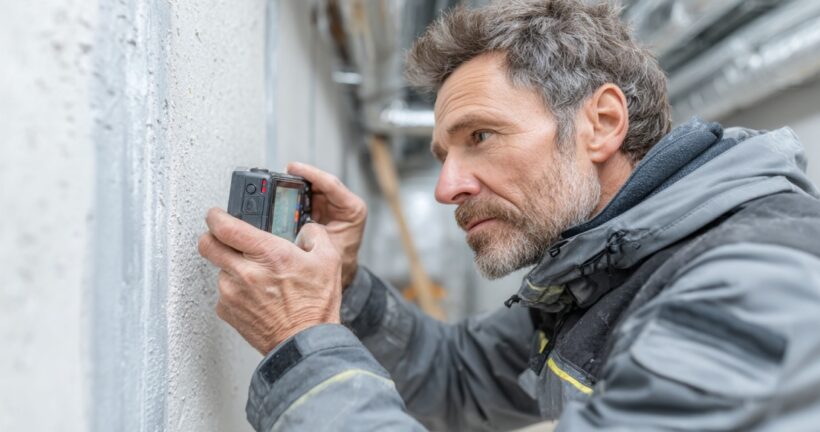
Before any layout is sketched, the basement must be audited for health and structural viability. Identifying past water ingress through efflorescence (white salt deposits) or damp corners is essential, as finishes will not solve groundwater issues. Radon testing is also a non-negotiable step; if levels exceed 4.0 pCi/L, a mitigation system must be installed before sealing the slab.
Furthermore, documenting the "as-built" conditions—including ceiling heights, ductwork obstructions, and structural beams—determines the potential room flow. Exterior remediation, such as cleaning gutters and grading soil away from the foundation at a minimum 5% slope, is the most cost-effective way to ensure a dry interior. Always solve moisture at the source before investing in interior finishes.
2. Code & Safety Essentials: Egress and Electrical
Basement finishing triggers specific life-safety requirements that cannot be ignored. Every sleeping room must have an egress window with a minimum clear opening of 5.7 square feet and a sill height no higher than 44 inches from the floor. These openings provide a vital rescue path for occupants and an entry point for emergency responders during a fire.
Electrical safety is equally paramount, requiring Arc-Fault Circuit Interrupter (AFCI) protection for living areas and Ground-Fault Circuit Interrupter (GFCI) protection near any water sources. Smoke and Carbon Monoxide alarms must be interconnected with the rest of the home’s system. Professional permits and phased inspections (framing, rough-in, insulation, final) protect the homeowner’s equity and future resale value.
3. Envelope Engineering: Building Dry, Warm Walls
The physics of a basement wall differ from above-grade structures because the foundation is in constant contact with soil moisture. Traditional fiberglass batts pressed against concrete often lead to interstitial condensation and mold growth. The modern standard is a continuous layer of rigid foam (EPS or XPS) or closed-cell spray foam directly against the foundation to act as a thermal break.
Once the thermal break is established, a 2x4 stud wall can be built inboard, filled with mineral wool for added R-value and acoustic damping. Air sealing the top and bottom plates, as well as the rim joist area, is vital to prevent the "stack effect" from pulling cold air through the assembly. This "dry-inward" approach ensures that any minor moisture vapor can migrate into the conditioned space rather than being trapped against the wood.
4. Subfloor Systems and Resilient Flooring
Concrete slabs are naturally cold and often irregular. To maximize comfort, many professionals utilize a subfloor panel system or a dimpled membrane combined with plywood to create an air gap. This elevates the finished floor, providing a thermal break and a drainage path for minor incidents of vapor drive from the slab.
For the finish layer, Luxury Vinyl Plank (LVP) is the industry gold standard due to its waterproof nature and dimensional stability. Other viable options include engineered wood rated for below-grade use or ceramic tile in high-moisture zones like bathrooms. Avoid traditional wall-to-wall carpet with organic padding, as these materials easily trap allergens and moisture in subterranean environments.
5. Mechanical, Electrical, and Plumbing (MEP)
Mechanical systems must be balanced to ensure proper indoor air quality (IAQ). Extending supply and return ducts thoughtfully prevents rooms from becoming stuffy or pressurized. Bath fans should be high-CFM, ultra-quiet models that terminate directly to the building exterior via insulated ducts, preventing moisture from dumping into the joist bays.
Plumbing additions are most economical when located near existing main stacks to minimize concrete trenching. For laundry areas or wet bars, always include a drain pan and a smart leak alarm. Furthermore, roughing in a dedicated dehumidifier drain line near the floor drain ensures that the space can maintain a relative humidity below 50% during humid summer months without manual intervention.
6. Layered Lighting and Acoustic Attenuation
Basements require a "layered" lighting approach to counteract the lack of natural light. This involves combining ambient recessed cans (2700K-3000K for a natural feel) with task lighting over workspaces and accent lighting for architectural features. High-CRI (Color Rendering Index) LEDs are recommended to ensure colors appear vivid and accurate.
Acoustic comfort is often overlooked until the project is finished. Insulating interior partitions with mineral wool and utilizing resilient channels or sound-damping drywall on the ceiling can significantly reduce footfall noise from the floor above. Solid-core doors are also a high-value upgrade for media rooms or home offices, providing instant privacy and decibel reduction.
7. Cost Controls and Common Construction Pitfalls
Controlling the budget for a basement remodel requires disciplined selection and logistical planning. One of the largest cost levers is the placement of plumbing; keeping fixtures within a few feet of existing lines can save thousands in excavation costs. Using pre-finished trims and stock cabinetry with high-end inserts provides a custom look without the bespoke price tag.
Construction pitfalls often stem from rushing the "envelope" phase. Skipping exterior water management or using polyethylene vapor barriers against concrete are the most common causes of system failure. Homeowners should also verify that their electrical panel has the capacity for new dedicated circuits required for media gear or home gyms before the framing begins. A 10% contingency fund is recommended to address unforeseen issues like hidden rim joist rot or cracked waste lines.
Frequently Asked Questions
Why is a polyethylene vapor barrier bad for basement walls?
Polyethylene traps moisture between the plastic and the concrete. Because foundation walls are never truly dry, this trapped moisture leads to mold growth on the studs and insulation. Modern code prefers assemblies that allow vapor to move and dry toward the interior.
Do I really need a permit for a basement finish?
Yes. Permits ensure that life-safety items like egress and electrical grounding are verified by a third party. Without a permit, you may face insurance claim denials or difficulty selling your home, as the square footage cannot be officially counted.

Posting Komentar